
If I Were Running for Office, I’d Hire a Bigger Marketing Team
I’d hire everyone I could.
I’d hire you, your friends, your neighbors, and as many people as possible in the district I was running in. Why? Because it would help the campaign, help local people, and maybe even improve politics itself.
Right now, political campaigns spend enormous amounts of money on advertising. Candidates, PACs, Super PACs, and political organizations pour millions into TV ads, internet ads, consultants, and mailers. Much of that money goes straight to giant corporations like Google, Meta, Apple, and major media companies instead of staying in the communities politicians claim they want to help.
How can politicians say they are fighting for local people while writing huge checks to Silicon Valley and national media firms?
So why not try something different?
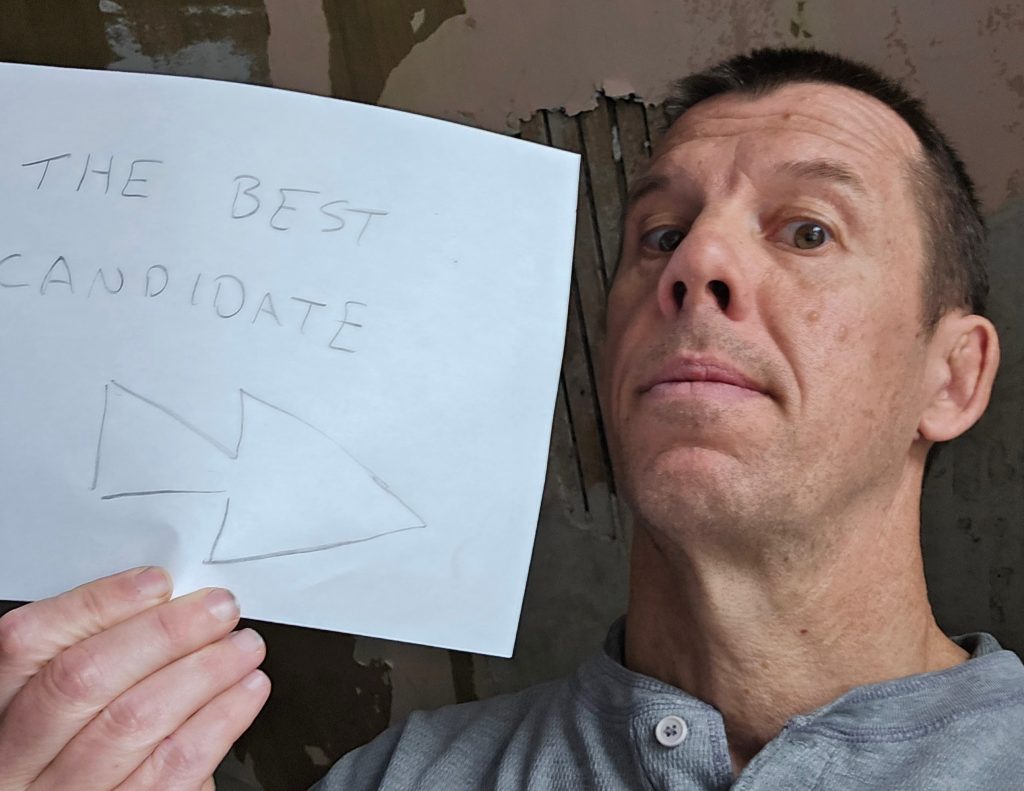
Hire the constituents to be the Marketeers for the political candidates.
Instead of spending campaign money on corporate advertising, candidates could hire the constituents to become local campaign marketers and organizers.
Political campaigns already spend heavily on advertising. In the 2012 and 2014 election cycles, Senate campaigns spent roughly 43% of their budgets on ads. (The Portland Press Herald)
Imagine the difference between seeing another annoying YouTube ad versus hearing directly from someone you know.
Imagine your friend saying: “I’m working for this campaign because I believe in what they stand for.” That kind of word of mouth would be more powerful than another polished attack ad.
Even better, imagine groups of real supporters from different candidates sitting together and discussing the issues openly. Real conversations about policy. Real debate. Not just slogans repeated over and over.
Would that really be worse than the system we already have?
And the interesting part is: a candidate would not need a new law to do this. They could simply start doing it. Maybe we would want to encourage more corporate money going into campaigns and more rich people trying to bribe us! It wouldn’t take long before all candidates did this. Would the candidate that paid more to each marketeer win? Would that be good or bad?
Even George Washington bribed his constituents by providing food and drinks (beer) to supporters during his campaign for the Virginia House of Burgesses. Campaign traditions have always evolved. (Wikipedia).
Maybe a modern campaign could work something like this:
- Talk to people about voting for the campaign: $1
- Explain the candidate’s positions: $1
- Put a campaign sign on your lawn: $5
- Make and share a campaign video online: $4
- Recruit other volunteers: $1
- Help raise donations or organize events
If someone actively participated in the campaign, maybe they could earn up to $15.
Importantly, this would not be buying votes. Paying someone to vote a certain way is illegal. But campaigns are already allowed to hire staff, organizers, marketers, canvassers, and consultants. The idea would be expanding that concept to include more of the citizens within the voting area. People could still vote for whoever they wanted. The difference is that campaign money would stay in local communities instead of flowing out to large advertising companies.
Since I live in Maine, let’s look at that as an example. In Maine, campaign spending has reached enormous levels for a small population. The 2022 Maine governor’s race ultimately exceeded $28 million in total spending when candidates, parties, and outside groups were included. (The Portland Press Herald) So imagine $28 million split between 965,000 eligible voters is $29 per voter. That’s better than watching another candidate television advertisement telling us that the candidate grew up so poor that they lived under a dandelion and ate ants.
But that’s just one government position. The 2020 Maine U.S. Senate race became the most expensive election in Maine history, with roughly $92 million spent overall. (The Portland Press Herald) Or another $95 per voter! Now we’re talking!
But wait! That’s not all. Let’s look at the United States. Nationally, the 2020 federal election cycle cost around $14 billion according to multiple election tracking organizations. 174 million eligible voters is another $80 per voter. Now we’re talking.
Of course, it wouldn’t be quite that high, you’d need to organize this and still provide the marketing tools, but even redirecting part of campaign spending toward local people instead of corporate advertising could potentially keep millions of dollars circulating inside the local economy.
Campaigns already hire consultants, media buyers, strategists, influencers, and canvassers. So why not expand that idea and let the actual voters participate directly?
At the very least, it might create more real conversations and fewer ads everyone skips anyway.